
Differentiating Difficulty and Complexity
Can Gentile's Taxonomy improve our understanding of two-ball dribbling drills?

The continuous one-vs-two/two-vs-one drill, as I have said previously, is my favorite dribbling drill.
I re-posted the drill recently because I found an amusing comment calling it cardio more than dribbling practice in a thread that started with a trainer calling a series of stationary two-ball drills “the most difficult ball handling workout on the internet.”
The workout included stationary drills like this:
One of the most enduring concepts from my motor learning classes is Gentile’s taxonomy of motor skills, which categorizes the complexity of a skill. The taxonomy uses four categories, two based on the environmental context and two based on the function of the action.
First, is the environment fixed or stable? A basketball court is a fixed, stable environment — the floor does not move — but defenders change the stability. Defenders affect the time and space as one must respond to external stimuli. Second, is there inter-trial variability? Is it the same thing every time or does the skill change regularly? Third, is there object manipulation? Most skills in basketball involve object manipulation, as the ball is the object. Finally, is the skill performed standing still or with movement? The least complex skills are in the upper left-hand corner (Fixed environment, no variability, no object, no movement), and the most complex skills are in the lower right-hand corner (changing environment, inter-trial variability, object, movement).
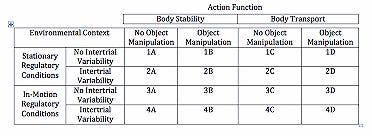
The most difficult ball-handling workout used stationary two-ball drills. Dribbling a ball is object manipulation; therefore the A and C columns are eliminated. A stationary drill is body stability; therefore, the drills fit in column B. A stationary, undefended drill has no changes in the environment, no affect on time and space; the environment is fixed and unmoving. Finally, the goal of stationary dribbling drills is to perform the same pattern repeatedly, meaning no inter-trial variability. Therefore, the stationary two-ball dribbling drills are categorized in 1B, relatively simple drills.
Not all drills are the same, and some are definitely harder than others. Some patterns are more difficult to learn and repeat, but their complexity is the same. Stationary, undefended drills are not complex. The lack of complexity suggests they are relatively easy to learn with sufficient practice. Almost anyone can learn to do the drills in Stephen Curry’s two-ball warmup routine, but few players can dribble the ball masterfully while being trapped after using an on-ball screen to find and pass to the open player. “Complexity translates better to simplicity, but not vice versa,” as Rafe Kelley said.
Dribbling against a trap is categorized in 4D. The player is moving (body transport), dribbling (manipulating an object), every trap differs in location, pressure, defenders, spacing, and more (inter-trial variability), and defenders and passing targets are moving (in-motion regulatory conditions). If simplicity does not transfer to complexity, do 1B drills transfer to 4D performance?
Is complexity the same as difficulty, which was the initial argument?
The taxonomy does not account for individual differences. Curry’s two-ball drills are easy for him to perform, but a beginner will struggle. The taxonomy refers only to the task and does not account for the individual’s experience, skill level, and more.
John Kiely wrote about complicated and complex: “Complicated machine-like systems typically follow one path to achieve a specific end, and as such are highly predictable, but also highly vulnerable. Complex systems achieve their objectives through a process of exploration and on-going adaptation; negotiating obstacles, solving problems through trial-and-error, and flexibly adapting to changing circumstances.”
Imagine the difference between a strict play as I was taught as a young player, and advantage basketball. A play has one path to achieve a specific end. An intricate play, like those designed by Danny Hurley, are complicated, but not complex. Plays become predictable, like the Flex offense I ran as a child, and therefore vulnerable. I once coached against a team that cycled through six plays in the first quarter, scoring on almost every one — good plays, tough to defend — but after the first quarter, I called out the action as soon as they called out their play, and our defense improved. Their best player eventually looked at their coach and asked what to do. Their complicated plays no longer worked, and they were vulnerable. A team using advantage principles is not searching for one specific end, but flexibly adapting and solving problems, exploring to find the bigger advantage. They are antifragile; they thrive when the defense acts to take away the first option and push the possession toward chaos.
I differentiated task difficulty and task complexity in The 21st Century Basketball Practice, based in part on Kiely’s ideas of complicated and complex. Both exist on a continuum. Task difficulty (easy to hard) depends on the individual more than the task, whereas task complexity (simple to complex) is based on the task more than the individual. A task, such as Curry’s two-ball warmup, can be simple, but also hard for a beginner. Meanwhile, dribbling through the trap can be complex, but also relatively easy for a player with Curry’s skill.
The tasks are the same whether Curry or a beginner performs the two-ball drill, but the relative difficulty changes. The change in difficulty is based on the individual and his skill level and experience, not the actual task. The initial drills were called difficult, but eight-year-olds can do them better than the high-school player in the video. Difficulty is relative, and based on the individual. However, the drills are relatively simple, as the environment does not change, there is minimal variability (multiple drills, but each without any inter-trial variability), and no movement [Note, when I finally watched to the end, there are some drills with movement; I initially stopped after 10 seconds or less]. The most difficult drill is the one you find most difficult, but the most complex drill involves dribbling against defenders with a drive, pass, shot option: The more potential interactions, the greater the complexity.
In practice, we can progress drills along either continuum. As players master the Curry two-ball warmup drills, we can make the drills harder or more complex. We can add to the pattern, require greater speed (X number of repetitions in a minute), and more to make the exercise harder, or we can add movement to make the drill more complex. Performing the same drills while walking forward and backward (like my video above) moves the 1B drill to a 1D drill, increasing complexity. Adding movement also makes the drill more difficult for most players, at least initially.
However, even the more difficult, more complex exercise is far from the complexity of a game, which means the direct transfer is minimal. Instead, these drills are practicing something other than the skill performed during the game; the drill is solving a different problem. As long as we understand the problem, the drill is useful. However, if our goal is to dribble more competently against a trap in the game, the two-ball warmup drills are unlikely to improve this performance.
Instead, I use two-ball drills primarily to demonstrate competence and improve confidence. Players see themselves mastering new drills and harder patterns, which is easier to see with simple drills, and increase their confidence in their skills. Confidence reinforces competence, which reinforces confidence: It is a positive feedback loop.
A coach could use the drill to improve ball control on the reception of the dribble or to work on pounding the ball harder. The coach and player would need the correct intention and concentration to make these improvements rather than grinding or getting through the drill. Potentially these problems could derail a player in games and cleaning up these issues — using this drill to solve this specific problem — could enhance game dribbling and give him more options when dribbling against a trap.
As I wrote a few weeks ago, “Drills are a tool. They are neither good nor bad. Good drills are when the purpose and the activity align; bad drills are when they do not.” Hard drills are equally subjective, and a hard or difficult drill for one player is easy for another. Complexity, however, is a somewhat objective measure, provided one supports Gentile’s taxonomy.
Of course, Gentile’s taxonomy is related to open and closed skills, a measure more widely accepted. Open skills are performed in dynamic, unpredictable environments requiring decision-making, and movements are externally-controlled, whereas closed skills are performed in predictable, self-contained environments with minimal to no decision-making and are self-paced. Basketball is an open-skill sport; a free throw is a closed skill. The one-vs-two/two-vs-one drill is an open-skill drill; the two-ball drills are a closed skill. How much improvement in an open-skill sport can we derive from closed-skill practice?
The most important question, in terms of skill development, is whether or not hard drills transfer to improved game performance. It depends. Are the drills designed to solve a specific problem for a specific player? There may be far or indirect transfer with the drill improving one aspect of a skill, reducing mistakes and improving performance. However, for near or direct transfer, drills should match or near the game’s complexity. We improve at that which we practice. Are you practicing to improve your ability to dribble two balls or your ability to dribble past two defenders?